What This Site Is
WarmWillowLine publishes reference material on textile weaving with a focus on frame and floor loom techniques, natural fiber characteristics, and pattern structure. The content covers topics relevant to handweavers working in Poland: loom types common in Central European craft practice, fibers historically and currently produced or traded in the region, and pattern traditions documented in Polish ethnographic sources.
The site does not sell products or offer instruction. It presents factual, descriptive content drawn from publicly available sources in textile history, fiber science, and weaving technology. Articles are written in English to make the reference material accessible to an international audience.
Scope and Approach
Coverage focuses on three main subject areas:
- Loom types: frame looms, rigid-heddle looms, floor looms with shaft systems, and their mechanical operation.
- Natural fibers: wool, linen, cotton, and silk as used in warp and weft; their physical properties and behavior during weaving and finishing.
- Pattern construction: weaving drafts, threading sequences, tie-up configurations, and weave structures including tabby, twill, and block structures.
References point to primary and secondary sources where available: Wikipedia articles on relevant topics, publicly accessible academic papers, and established weaving references. No proprietary data or invented statistics appear in the content.
Contact
Use the contact form on the homepage to submit a question or note. Responses are not guaranteed, as this site operates without a dedicated editorial team.
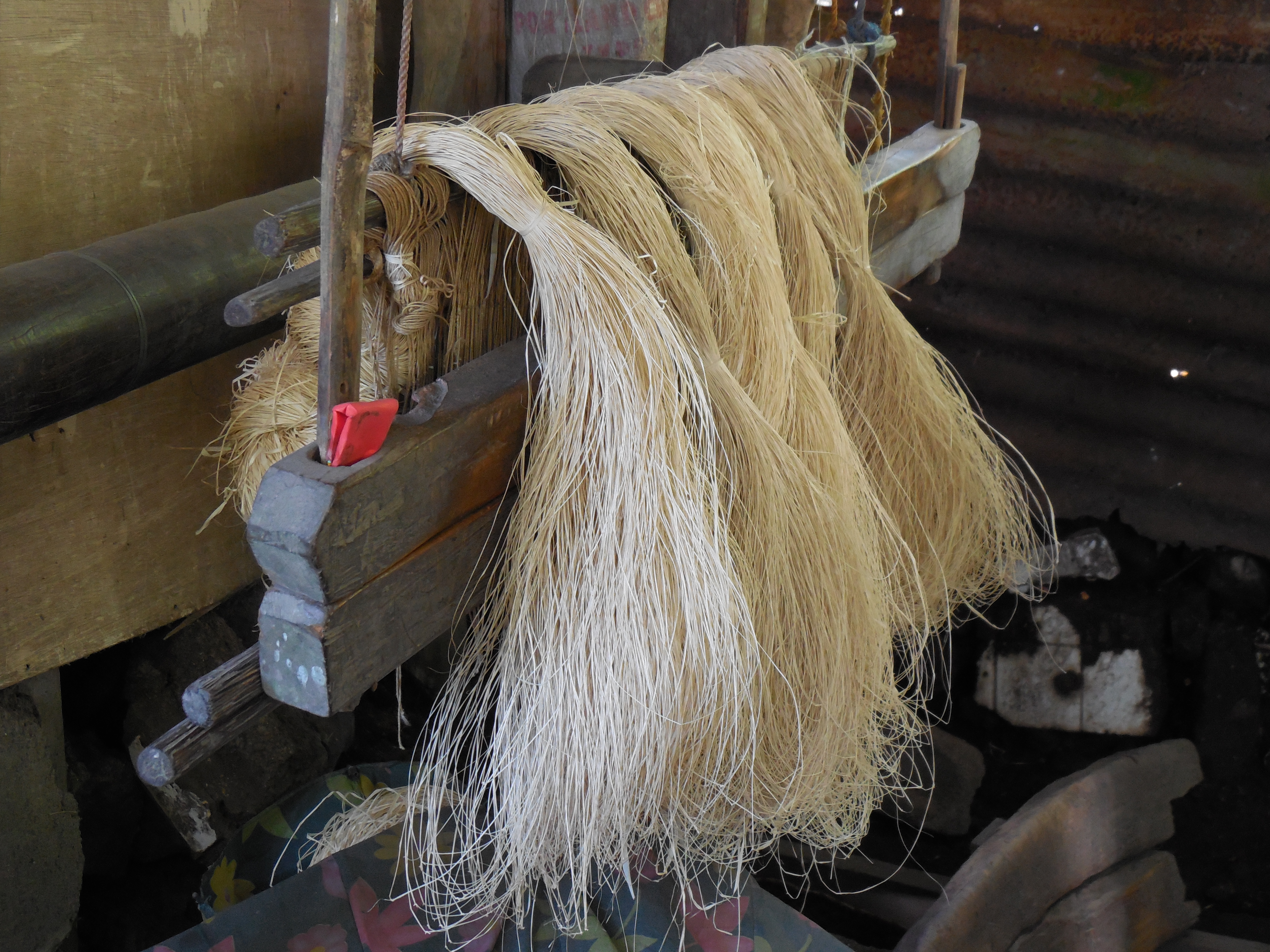
Weaving loom with abaca fiber, Banton, Philippines. The basic mechanical structure — warp under tension, shed formed for weft insertion — is shared by all frame and floor loom types. Source: Wikimedia Commons (CC BY-SA 4.0), Lawrence Ruiz.